
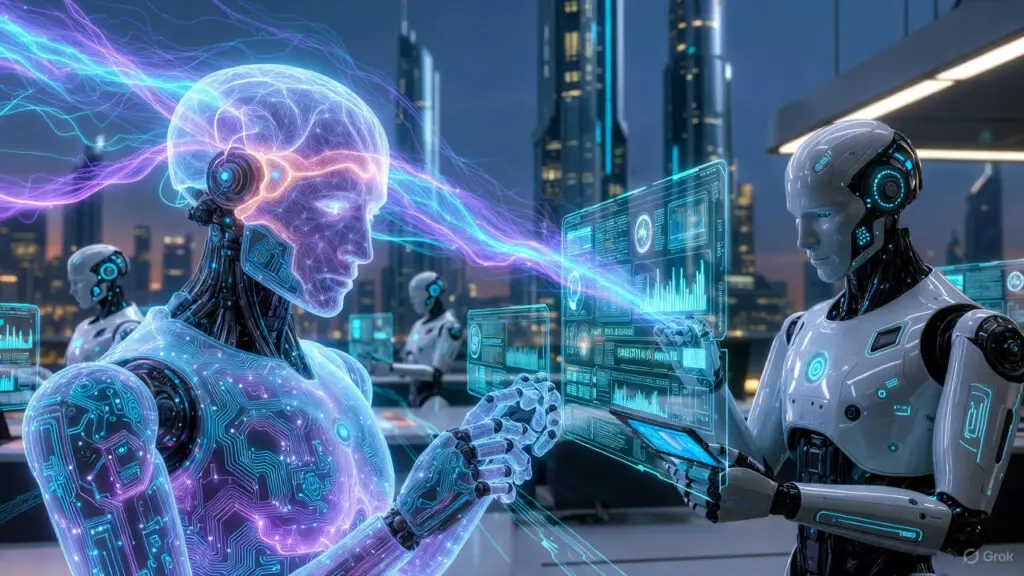
“The Future of AI: Breakthrough Innovations and Real-World Impacts You Need to Know Now”
Artificial Intelligence (AI) has undergone a remarkable transformation in recent years, evolving from experimental technology into a driving force that reshapes entire industries. With rapid advancements in machine learning, neural networks, and natural language processing, AI has moved far beyond automation—now serving as a catalyst for innovation, efficiency, and smarter decision-making across the globe.
Today, AI is not just a futuristic concept. It is an everyday tool empowering organizations to streamline operations, improve customer experiences, and generate new opportunities. And for professionals or businesses aiming to stay competitive in this new digital era, exploring modern AI resources, courses, and productivity tools becomes essential.
👉 You can find curated digital tools and training programs here: Explore Digital Products
AI in the Medical Field: Transforming Diagnostics and Patient Care
One of the industries experiencing the greatest impact is healthcare. AI-powered systems are revolutionizing how diagnoses are performed and how treatments are personalized.
Smarter and Faster Medical Diagnoses
Advanced algorithms can now analyze massive datasets—such as lab results, electronic health records, and medical imaging—with a level of precision that rivals or exceeds human specialists. These systems not only reduce diagnostic time but also enable earlier detection of diseases, resulting in more effective interventions.
AI applications in the medical field include:
Imaging analysis for identifying tumors, infections, and abnormalities
Predictive models that forecast patient risks
Drug discovery tools that accelerate the creation of new medicines
Personalized treatment algorithms based on patient history and genetic data
With these advancements, AI is reshaping the future of medicine and improving patient outcomes worldwide.
AI in Finance: Enhancing Security and Automation
The financial sector is another major beneficiary of AI innovation. Machine learning models now play a central role in risk assessment, fraud detection, and digital service optimization.
Fraud Prevention and Risk Management
Financial institutions rely heavily on AI to analyze behavioral patterns and identify anomalies that indicate fraudulent activity. These tools detect suspicious transactions in real time, providing enhanced protection for both banks and customers.
Automation and Personalized Banking
AI is also used to automate customer service processes, streamline loan approvals, and provide personalized financial recommendations. Chatbots, robo-advisors, and automated portfolio managers are becoming increasingly common.
For individuals and businesses wanting to leverage AI-driven growth, acquiring training or digital tools has become indispensable.
👉 See recommended digital courses and AI resources: Visit the Products Page
AI in Transportation: A New Era of Mobility
The transportation sector is undergoing a technological revolution driven by AI-powered innovation.
Autonomous Vehicles and Smart Mobility
Self-driving cars rely on complex algorithms to interpret their surroundings and make safe decisions. These vehicles use:
Computer vision
Sensor fusion
Real-time data processing
Predictive modeling
AI also strengthens traffic management systems. Smart city infrastructures now integrate automated traffic controls that reduce congestion, improve travel times, and enhance road safety.
The combination of AI and advanced engineering is shaping the future of modern mobility.
New AI Features and Breakthrough Innovations
AI is advancing not only in adoption but also in complexity and capability. Several emerging technologies are redefining what AI can accomplish.
1. Next-Generation Machine Learning Algorithms
Machine learning continues to evolve with improved model structures, more efficient training techniques, and better performance in pattern recognition. These developments allow machines to learn from vast datasets faster and with greater accuracy.
2. Advances in Computer Vision
Computer vision, once limited to simple image recognition, now enables real-time object detection, emotion analysis, face recognition, and environment interpretation. These capabilities power applications in:
Security and surveillance
Medical imaging
Retail checkout automation
Entertainment and gaming
3. Robotics Integrated with AI
Modern robots equipped with intelligent sensors and adaptive algorithms can navigate complex environments, assist humans at home, and perform intricate industrial tasks with precision.
4. Generative AI: Creativity Powered by Machines
Generative AI tools can now create:
Written content
Designs
Artwork
Music
Solutions to complex problems
This capability expands human creativity and opens the door to new forms of collaboration between people and intelligent systems.
👉 To learn and explore AI-powered productivity tools, visit:
Digital Online Entrepreneur – Products
Real-World Applications of AI Across Industries
AI is no longer theoretical — it is embedded in everyday operations across multiple industries.
Healthcare
Predictive analytics
Personalized treatment plans
Smart diagnostics
Early disease detection
Automotive
Self-driving cars
Real-time safety features
Smart navigation systems
Digital Marketing
AI is reshaping how businesses connect with customers. Data-driven insights now enable:
Hyper-personalized ad targeting
Predictive campaign analytics
Automated customer segmentation
Enhanced user experiences
Companies using AI in marketing enjoy higher engagement rates, more accurate targeting, and improved conversion results.
Challenges and Ethical Considerations in AI Development
Despite its benefits, AI introduces several challenges that require thoughtful solutions.
1. Algorithmic Bias
If training data contains bias, AI systems may reproduce or intensify discriminatory patterns in hiring, law enforcement, or lending decisions.
2. Data Privacy Concerns
Massive data collection increases the risk of misuse, security breaches, and loss of user trust. Transparent policies and responsible data handling are essential.
3. Lack of Regulation
Clear frameworks are needed to guide ethical AI deployment and ensure the technology benefits society as a whole.
4. Workforce Transition
As automation expands, professional reskilling becomes critical. Businesses must adopt training programs that prepare employees for an AI-driven future.
👉 Discover digital training programs that help professionals adapt to the AI era:
Explore Courses and Digital Tools
The Future of Artificial Intelligence: What Lies Ahead
The future of AI is full of potential. Experts predict deeper integration in fields like:
Education
Cybersecurity
Healthcare
Logistics
Creative industries
Smart city development
For organizations and professionals to thrive, embracing responsible AI practices and continuous learning will be fundamental.
Final Thoughts
Artificial intelligence is advancing at an unprecedented pace, reshaping industries and opening new doors for innovation. Whether in healthcare, finance, marketing, or transportation, AI empowers organizations to become more efficient, strategic, and future-ready.
And as AI continues to evolve, equipping yourself with the right knowledge and tools becomes essential.
👉 Explore AI courses, digital tools, and resources that help you stay ahead:
🔗 https://digitalempreendedoronline.com/produtos/